為了一場多年前的約定 For a Promise Made Years Ago
談起為何要去馬丘比丘,似乎要從往事說起。
當年我與H先生同是海外志工在台北受訓認識,接著我們外派到不同國家,我去南美洲巴拉圭,他去加勒比海聖文森,當時才在一起沒多久的我們聊起一年後的年度休假,當時很多志工同學們都說要去秘魯的馬丘比丘過年假,當時我倆也跟流行討論著,不然我們的年度休假也去馬丘比丘吧!無奈天不從人願,半年後,我的外公病危回台探望接著治喪,我也轉調去南太平洋小島國吐瓦魯,年度休假從馬丘比丘變成了美國紐約。
When people ask why I wanted to visit Machu Picchu, the answer begins—not with a place—but with a memory.
Years ago, my husband and I met while training as overseas volunteers in Taipei. Not long after, we were each assigned to different corners of the world—I to Paraguay in South America, he to Saint Vincent in the Caribbean. Still in the early days of our relationship, we often spoke of our upcoming annual leave, as many fellow volunteers dreamed aloud of spending theirs in Peru, exploring the legendary ruins of Machu Picchu.
Caught up in the excitement, we made our own quiet pact: Let’s go there, too. For our next break, we’ll meet in Peru.
But life, as it often does, had other plans. Six months later, my grandfather fell critically ill. I returned to Taiwan to be with family and attend his funeral. Afterward, I was reassigned to Tuvalu, a tiny island nation in the South Pacific. That year, our much-anticipated holiday in the Andes became a winter spent in New York instead—Machu Picchu would have to wait.
馬丘比丘,成了擱在我們心頭的一件待完成清單。直到買到去秘魯的促銷機票,重新燃起我們去馬丘比丘的念頭,這一次,義無反顧出發了。
Machu Picchu became one of those lingering promises—an unfinished line on the list we quietly carried in our hearts. Then one day, we stumbled upon a promotional fare to Peru, and just like that, the dream was rekindled. This time, there was no hesitation. We booked the tickets, packed our bags, and finally set off—ready to answer the call we had made to ourselves all those years ago.
文章導讀:秘魯 | 馬丘比丘旅遊攻略,行前必讀!(內含門票申請、交通方式、住宿等)Machu Picchu Travel Guide
馬丘比丘,是歷史的跋涉 Machu Picchu: A Journey Through History
進入正文前,簡略概述馬丘比丘的起落與歷史。
印加王國為南美洲強極一時的王國,幅員遼闊,從哥倫比亞到智利北邊皆是印加王國領土。從西元1200年始有國王,1533年西班牙人入侵並殺害國王,接著在西班牙人統治下成立新印加王國,設立魁儡國王,直到1572年,最後一任國王被西班牙人殺害,印加王朝正式崩毀劃下句點。
根據考古資料顯示,馬丘比丘 Machu Picchu建立於1440年的印加王國,直到1532年西班牙人入侵前,這近百年間都有人居住。同時也是皇室、貴族居住城市之一,並建有梯田、神殿、神廟、宮殿、陵墓等。16世紀初期,西班牙軍隊開始摧毀印加城市,位於海拔2400公尺的馬丘比丘位於高山中,因沒被西班牙軍隊發現而倖免並保存下來。並在1911年美國歷史學家海勒姆·賓厄姆三世 Hiram Bingham III的探險下,重新發現被滅亡後400年不曾曝光過的馬丘比丘。
為何印加帝國滅亡後400年後,馬丘比丘才被重新發現?馬丘比丘位於烏魯班巴河 Río Urubamba的叢林深處,位於馬丘比丘(註一)及海拔2720公尺瓦納比丘Wayna Picchu(註二)的山脊上,被河谷及高山環繞,蜿蜒的流域、密佈的森林,使得在山麓中無法看到馬丘比丘,只能在空中窺探它的容貌,才有「天空之城」的稱號。
Before stepping into the heart of the experience, it’s worth pausing to reflect on the rise and fall of Machu Picchu—an enduring testament to the legacy of the Inca Empire.
At its height, the Inca Empire was one of the most powerful civilizations in pre-Columbian South America, stretching from present-day Colombia all the way down to northern Chile. The empire began around 1200 AD with the rise of its first kings. But in 1533, the arrival of Spanish conquistadors marked a dramatic turning point. The Inca ruler was captured and executed, and although the Spanish installed a puppet monarchy under their control—known as the Neo-Inca State—it was short-lived. By 1572, with the execution of the last Inca ruler, the dynasty came to an end, and the empire was formally dismantled.
According to archaeological research, Machu Picchu was constructed around 1440 during the height of the Inca Empire. For nearly a century—until the Spanish invasion in 1532—it was continuously inhabited. Thought to be a royal estate or sacred city, Machu Picchu housed the empire’s elite and featured terraced fields, temples, palaces, ceremonial shrines, and burial sites.
When Spanish forces swept through the Andes in the early 16th century, razing Inca cities and temples, Machu Picchu was spared—not by design, but by geography. Hidden high in the Andes at 2,400 meters above sea level, the city remained untouched and unnoticed. It was not until 1911 that American historian and explorer Hiram Bingham III rediscovered it, bringing Machu Picchu back into the world’s view after nearly 400 years of obscurity.
Why did it take four centuries to find this “lost” city of the Incas? The answer lies in its breathtaking, almost mystical location. Machu Picchu sits deep within the jungle-cloaked folds of the Urubamba River Valley, perched between the mountain of Machu Picchu (Note 1) and the iconic Huayna Picchu (Note 2), rising to 2,720 meters. Enveloped by towering peaks and thick forest, the site is invisible from the valley below—revealed only from above. It’s this hidden, elevated setting that earned Machu Picchu the evocative name: The Lost City in the Sky.
註一:奇楚瓦語Quechua為印加帝國的官方語言,馬丘比丘意為「古老的山」。
Note 1: In Quechua—the official language of the Inca Empire— Machu Picchu means “Old Mountain.”
註二:瓦納比丘在奇楚瓦語意思為年輕的山。
Note 2: Huayna Picchu means “Young Mountain” in Quechua.
為何馬丘比丘會被廢棄?1532年西班牙攻陷印加帝國,第13任國王也被捕獲殺死,印加帝國正式瓦解,西班人也佔領了當時的印加帝國首都庫斯科,並大肆破壞,部分印加軍隊逃離庫斯科,躲到深山野嶺之中,打造秘密基地比爾卡班巴 Willkapampa做最後的抵抗。比爾卡班巴是一座印加古城,因為戰亂,古城被毀,也不能知曉確切位置在哪裡。當年海勒姆·賓厄姆三世為了尋找比爾卡班巴,卻誤打誤撞發現馬丘比丘,並把馬丘比丘誤認為比爾卡班巴。多年後,考古學家證實真正的比爾卡班巴是位於馬丘比丘西邊80公里的Espíritu Pampa才是海勒姆·賓厄姆三世要找的比爾卡班巴。
意外發現的馬丘比丘知名度卻比成謎的比爾卡班巴要有人氣,因為馬丘比丘是至今保存完整度極高的印加遺跡,考古貢獻不言而喻。
Why Was Machu Picchu Abandoned?
In 1532, the Spanish conquistadors captured and executed the 13th Inca emperor, triggering the rapid collapse of the Inca Empire. The Spanish soon occupied Cusco—the imperial capital—and unleashed widespread destruction upon temples, palaces, and ceremonial sites. In the aftermath, surviving Inca forces retreated deep into the rugged Andean wilderness, where they established a final stronghold known as Vilcabamba (or Willkapampa in Quechua), from which they continued their resistance.
Vilcabamba became a hidden city of defiance, but war eventually took its toll. The stronghold was destroyed, and its precise location faded from memory, becoming the subject of centuries of speculation.
In 1911, American historian and explorer Hiram Bingham III ventured into the Andes in search of this lost city of resistance. Instead, he stumbled upon the spectacular ruins of Machu Picchu. Mistaking its grandeur and isolation for that of Vilcabamba, Bingham believed he had found the last city of the Incas.
It wasn’t until decades later that archaeologists confirmed the true location of Vilcabamba, identifying Espíritu Pampa—80 kilometers west of Machu Picchu—as the site Bingham had originally sought. Yet by then, Machu Picchu had already captivated the world.
Ironically, the mistaken identity only amplified Machu Picchu’s fame. Unlike Vilcabamba, which lay in ruins, Machu Picchu had remained extraordinarily well-preserved—untouched by Spanish conquest, protected by its elevation and isolation. Today, it stands not only as one of the most iconic archaeological sites of the ancient world, but also as a powerful symbol of the Inca civilization’s artistry, engineering, and enduring mystery.
馬丘比丘,最後一哩路 Machu Picchu: The Final Ascent
拜訪秘魯時正逢雨季,抵達熱水鎮當天卻是晴天萬里,我們安排隔天上山,就在吃午餐時,H先生問:「還是妳覺得我們今天下午也上去馬丘比丘啊?下午出大太陽耶!」
「對啊,我也擔心明早天氣不好,這樣拍照會不好看…,但是現在還買得到馬丘比丘門票嗎?還要買小巴的票,加一加我們倆人又要花好幾千元…真的要去嗎?」我邊吃著很鹹很鹹的午餐一邊跟H先生討論著。
我們一路奔波到熱水鎮,總算有些時間鬆口氣慢些步伐,最後決定下午悠哉逛熱水鎮並去做場印加按摩,這天下午就不上去馬丘比丘了。
We arrived in Aguas Calientes—the gateway to Machu Picchu—during Peru’s rainy season. And yet, to our surprise, the skies were a clear, brilliant blue that day. As we sat down for lunch, basking in the rare sunshine, Henry looked up from his plate and asked, “Do you think we should go up to Machu Picchu this afternoon instead? The weather’s perfect right now.”
“I was just thinking the same,” I replied, half-laughing. “I’m worried it might rain tomorrow morning, and the photos won’t turn out as nice. But… are tickets for Machu Picchu still available for this afternoon? We’d need to get the bus tickets too. For the two of us, that adds up—are we really doing this?” I said, between bites of what was possibly the saltiest lunch I’ve ever had.
After days of travel and winding our way through Peru’s mountain routes, we had finally arrived at Aguas Calientes. It felt like the first time we could breathe a little, slow down, and simply take in the moment. In the end, we decided not to rush. We spent the afternoon exploring the town at our own pace, indulging in a much-needed Inca massage, and saving Machu Picchu for the next day.
Sometimes, the most rewarding journeys begin with a pause.
凌晨兩點多醒來,有點睡不著,不知道是因為時差,還是太過興奮無法安然入眠,在腦中胡思亂想到凌晨三點多又沉沉睡去,直到五點多,被暴雨聲吵醒,H先生呆坐在床上,睡眼惺忪問:「外面下大雨嗎?」
我起身一臉自暴自棄地走到背包旁邊,生無可戀拿出雨天備用的運動涼鞋,同時回答H先生:「是啊!外面雨好大噢!我把涼鞋拿出來了,看來今天也只能穿涼鞋上山了。」
Sometime after 2 a.m., I woke abruptly. I wasn’t sure if it was the jet lag or the sheer excitement of what lay ahead, but sleep simply wouldn’t come. My mind raced in the quiet dark, wandering through anticipation and fragments of dreams. By 3 a.m., I drifted off again, only to be stirred once more around 5—this time by the unmistakable roar of rain pounding against the roof.
Henry sat up groggily on the edge of the bed, still wrapped in sleep. “Is it raining out?” he asked, his voice heavy with disappointment.
I shuffled over to my backpack with a look of resigned acceptance, already knowing the answer. With a half-hearted sigh, I pulled out my backup plan: a pair of weatherproof sport sandals reserved for days just like this. “Yes,” I said flatly, holding them up for him to see. “It’s pouring. Looks like it’s going to be a sandals-up-the-mountain kind of day.”
So began our pilgrimage to Machu Picchu—not under golden sunrise skies, but beneath the moody, dramatic veil of the Andes in the rain.

用完早餐,把後背包寄放在青年旅館Mama Simona Machupicchu,捲起長褲褲管,拉了拉圍巾,打起傘,走進雨裡。
其實我們本來要搭乘第一班車上去馬丘比丘,想搶拍馬丘比丘空景,但是清晨的大雨澆熄了熱血,也怨恨自己昨天下午H先生提議上山時要遲疑甚至是心疼那些門票錢,這下可好了!我知道天晴天雨都是日常,作為一名經驗豐富的旅人,怪罪於天氣很不可取,但是,來到像馬丘比丘這樣世界級很難到達的景點,情願是個被曬到脫皮的艷陽日,而不是雲霧環繞的雨天啊!
After breakfast, we left our backpacks at Mama Simona Machupicchu, the cozy hostel where we had spent the night. I rolled up the cuffs of my pants, tightened my scarf, opened my umbrella, and stepped out into the rain.
We had originally planned to catch the first bus up to Machu Picchu—hoping to capture that rare, crowd-free glimpse of the ancient citadel. But the early morning downpour quickly extinguished our fiery ambition. I couldn’t help but regret hesitating the day before when Henry suggested we go up in the afternoon sunshine. At the time, I had fretted over the additional cost of entry tickets and shuttles. And now? The rain made that decision feel like a misstep.
I know, as any seasoned traveler does, that weather is part of the journey. To blame the rain would be futile. Still, when you finally arrive at a destination as remote and revered as Machu Picchu—one that sits atop so many dream itineraries—you can’t help but wish for clear skies and golden light. Not this heavy, cloud-shrouded curtain of rain that seemed to hide everything we came so far to see.


拿出前一天購買的小巴車票及護照跟著排隊,之後聽到前面那輛車喊著:「這車還有兩個座位,有人要先上車嗎?」我跟H先生擠到前車,想快點上山,工作人員看到我們便說:「座位是分開的,你們可以嗎?」
可以!
跟著上車,驚訝雨天也是滿車,想著這樣惡劣的天氣,不是只有我們上山,大家都還是興致勃勃,讓我有一點感動。坐我旁邊的是一位外國老太太,她問我是不是日本人?
「不是誒,我是台灣人。」我說
「真的喔,我有親戚也住在台灣呢!」外國老太太說
「妳從哪裡來?」我反問她
「加拿大,溫哥華人。」
「噢!我上個月才去溫哥華呢!我去班夫國家公園,真的好漂亮啊!妳有來過台灣嗎?」我問
「亞洲我只去過日本、香港而已,希望有機會去台灣旅遊。」加拿大老太太說
隨著山路彎彎曲曲,一路上轉來轉去,望著窗外,看到幾位徒步上山的旅客,還有濕漉漉的馬路,樹葉上沾滿雨水,我跟加拿大老太太說:「昨天天氣很好呢!怎麼今天就下雨了。」
加拿大老太太樂觀地說:「我看霧要散了,希望天氣好!」
短暫寒暄後,小巴也停在Belmond Sanctuary Lodge門口,我下車後,站在飯店門口等待H先生,接著,他拿出馬丘比丘門票、護照,準備入園。
With our shuttle tickets and passports in hand, we joined the growing line of travelers waiting to ascend to Machu Picchu. Suddenly, a voice called out from the front: “Two seats left on this bus—anyone want to hop on?” Without hesitation, Henry and I made our way forward. The staff looked at us and asked, “The seats are separate—is that okay?”
“Absolutely.”
We climbed aboard, grateful for the chance to get moving. I was surprised to see that even in this kind of weather, the bus was full. Despite the pouring rain, the spirit of adventure remained undampened. The shared sense of purpose among all these travelers—venturing into the mist together—moved me more than I expected.
Next to me sat an elderly foreign woman who turned to ask, “Are you Japanese?”
“No, I’m from Taiwan,” I replied with a smile.
“Really? I have relatives living in Taiwan!” she responded warmly.
“Where are you from?” I asked in return.
“Vancouver, Canada.”
“Oh! I was just there last month. I visited Banff National Park—it was breathtaking. Have you ever been to Taiwan?”
“I’ve only been to Japan and Hong Kong in Asia,” she said. “But I hope to visit Taiwan someday.”
As the shuttle zigzagged its way up the steep, winding road, we caught glimpses of hikers braving the mountain path, the wet roads gleaming beneath the mist, the trees glistening with rain. I turned to her again and said, “The weather was beautiful yesterday… I wonder why it had to rain today.”
With cheerful optimism, she smiled and said, “Looks like the fog is lifting—maybe the weather will turn!”
Soon after our short but pleasant conversation, the shuttle pulled up in front of the Belmond Sanctuary Lodge. I stepped off and stood beneath the hotel awning, waiting for Henry. He joined me shortly, tickets and passports in hand, ready to enter the lost city of the Incas.

門口查票、護照前,有多位秘魯導遊一一詢問需不需要馬丘比丘導遊?有一些團客已經有請導遊了,有些是散客,同時也有一位外國女生問我們要不要跟她一起聽導覽share導遊費用?我們婉拒她,表明想自己逛。
Just before the entrance gates—where tickets and passports are checked—several local guides stood waiting, gently offering their services to arriving visitors. Some travelers were already part of organized tour groups with guides of their own, while others, like us, had arrived independently. One solo foreign traveler even approached us, asking if we’d like to join her in sharing a guided tour to split the cost.
We politely declined, expressing our preference to wander through Machu Picchu at our own pace.
So, the question arises: Do you need to hire a guide to explore Machu Picchu?
While hiring a licensed guide is no longer mandatory for general entry, many travelers find it enriching. Guides bring the ancient citadel to life with stories of Incan history, hidden symbolism in the stonework, and insights that might otherwise go unnoticed. For those passionate about archaeology or curious about the cultural layers behind the ruins, a guide can offer invaluable context.
But if you prefer to discover quietly, taking in the atmosphere on your own terms, self-guided exploration is just as magical. After all, the spirit of Machu Picchu lies as much in its mystery as it does in its majesty.
我需要雇用一位導遊 為我導覽馬丘比丘嗎? Do I Need to Hire a Guide to Explore Machu Picchu?

在入口處跟著排隊進場,要查驗門票、護照。一進園跟著人群走,看到大家都穿著雨衣,我們也在一旁套上從台灣帶來的雨衣,努力無視這樣的壞天氣,滿心期待一睹馬丘比丘容顏。
We queued at the entrance, tickets and passports in hand, ready for inspection. Once inside, we followed the slow-moving stream of visitors into the park. Everyone was bundled up in raincoats, and we did the same—slipping on the ponchos we’d brought all the way from Taiwan.
The rain may have persisted, but we tried our best to ignore the gloom. Despite the dreary weather, our hearts brimmed with anticipation—eager to finally lay eyes on the legendary Machu Picchu.

跟著其他遊客的腳步前進,來到一片白茫茫的空曠處,見到有外國遊客在這兒拍照,我要H先生也趕緊去前面站著讓我拍張照,拍完後,要H先生來看剛才拍的照片,他說:「呃,穿雨衣拍照好醜!!!而且後面整片白色的濃霧,我說是在馬丘比丘誰相信啊!」說完就立刻把雨衣脫掉,從自己的手提袋中拿出雨傘撐著。
We followed the footsteps of other visitors and soon arrived at a wide, mist-shrouded clearing. A few foreign tourists were already there, snapping photos despite the white-out conditions. I quickly asked Henry to step forward so I could take his picture.
After the shutter clicked, I showed him the photo. He groaned, “Ugh, I look terrible in a raincoat! And with all that thick white fog behind me—who’s going to believe I’m actually at Machu Picchu?”
Without another word, he pulled off his raincoat, reached into his tote bag, and took out an umbrella, determined to salvage both style and proof of our presence at one of the world’s most iconic landmarks.
(請點HD畫質)(Please switch to HD for the full experience.)
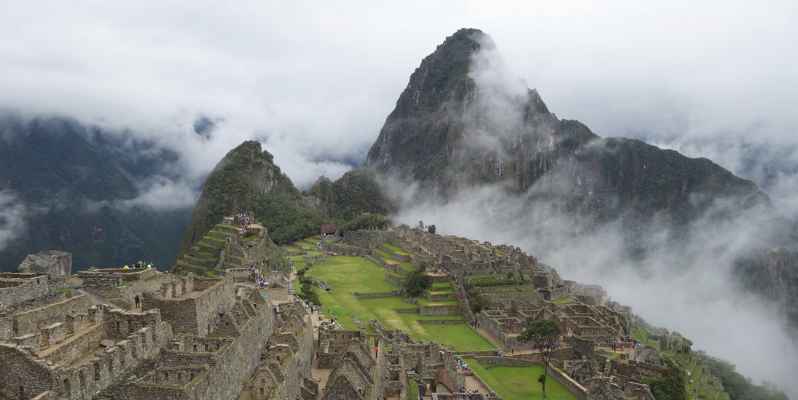
我們在這裡等了一些時間,原本一片霧茫茫,能見度為零,一陣風吹來,忽然,馬丘比丘出現了!讓我們又驚又喜又感動,為了這一刻這一幕,花了好幾年的時間才等到。此時,我才明白,一直對於壞天氣耿耿於懷,原來雲霧繚繞的馬丘比丘才是真正的絕美之地,心心念念的失落之城。
We waited there for a while, surrounded by dense fog with virtually zero visibility. Then, with a sudden gust of wind, the clouds began to drift—and just like that, Machu Picchu emerged before our eyes. The moment took our breath away. It was a wave of joy, awe, and deep emotion. After all these years, we had finally arrived at this very scene.
It was then I realized how much I had resented the bad weather—only to discover that it was the mist-laced version of Machu Picchu that revealed its true, haunting beauty. This was the mythical Lost City we had long dreamed of, wrapped in mystery and magic, and now finally within reach.

要拍到馬丘比丘全景不太容易,大多時候都是雲霧擋住,需要耐心等待,等風來,吹過一陣抓緊時間按下快門。
Capturing a full panoramic view of Machu Picchu is no easy feat. More often than not, the ancient citadel is shrouded in clouds and mist, requiring patience and persistence. You must wait for the wind to shift, for the fog to momentarily lift—then seize the fleeting moment and press the shutter.


個人私心喜歡雲霧繚繞的馬丘比丘,比荷蘭羊角村還要仙,同時充滿神秘感。
Personally, I have a deep fondness for Machu Picchu veiled in mist—it feels more ethereal than even the fairytale canals of Giethoorn in the Netherlands. There’s a haunting beauty to it, a mystical allure that lingers in the air, as if the ancient city still holds secrets waiting to be uncovered.

等到拍夠了全景,我們開始往瞭望屋前進,抬頭往上看,嗯,位於馬丘比丘南側最高處,視野應該會很好,慢慢移動走上去,期待更開闊地景色。
After capturing enough wide shots of the citadel, we began making our way toward the Guardhouse. Looking up, we saw it perched at the southernmost high point of Machu Picchu—surely a spot with breathtaking views. Step by step, we ascended slowly, anticipation growing with each turn, eager to take in an even more expansive panorama of this legendary landscape.

往瞭望屋走時,這個平台也是高人氣拍照地點,不但能拍到馬丘比丘全景,同時也不會有太多遮蔽物擋到,更是各國遊客爭相卡位的地點。我們在這裡遇到前一晚跟我們住同家青旅的韓國男生,在這裡認出彼此,因為他單獨前來,我主動提議幫他拍照,並請他也幫我們拍合照。能在路上相遇,舉手之勞的幫助還是很暖心。
As we made our way toward the Guardhouse, we arrived at a popular photo spot—a scenic platform offering unobstructed views of Machu Picchu in its full grandeur. It’s one of the most sought-after vantage points, where travelers from around the world jockey for the perfect angle.
It was here that we unexpectedly ran into a Korean traveler who had stayed at the same guesthouse as us the night before. We instantly recognized one another. Seeing that he was exploring alone, I offered to take a photo for him, and in return, he kindly took a picture of us together. These small acts of kindness shared along the journey always leave a lasting warmth.

瞭望屋看起來很近,誰知道走上去也會喘,放慢腳步慢慢走,反正不趕時間。
The Guardhouse looked deceptively close, but the climb was more strenuous than expected—soon we found ourselves out of breath. So, we slowed our pace, taking our time with each step. After all, there was no need to rush in a place like this.

馬丘比丘周圍的山巒也是很有靈氣,層層疊疊的高山,加上山嵐,每一處都像是神話。
The mountains surrounding Machu Picchu exude a mystical aura — layer upon layer of towering peaks draped in veils of mist, each vista evoking the grandeur of myth and legend.

沿著大階梯蜿蜒往上走,這區為西側梯田上部,作用為防止山崩而開闢。
Winding upward along the grand stone steps, visitors arrive at the upper terraces on the western slope — an ingeniously engineered zone, carved into the mountainside to prevent landslides and safeguard the sacred citadel.

雲霧散開,印加失落之城一點一滴顯露,我站在瞭望台俯視著,眼淚不爭氣滴落,是一種很感動很感動及好不容易啊的複雜心情,這世界上大概沒有一個地方能像馬丘比丘一樣,讓我流下激動的淚水。
As the mist slowly lifts, the Lost City of the Incas reveals itself, piece by breathtaking piece. From the vantage point above, I gaze down in awe — tears welling up, unbidden, and falling. It’s a wave of emotion that’s hard to name: wonder, gratitude, and the overwhelming sense of finally arriving. Perhaps nowhere else on Earth has moved me to tears the way Machu Picchu has.

我看見石砌的古老建築物鑲嵌在青翠的安第斯高峰之間。激流自風雨侵蝕了幾百年的城堡奔騰下泄。……在這崎嶇的高地,在這輝煌的廢墟,我尋到能續寫詩篇所必需的原則信念。
– 巴勃羅·聶魯達 Pablo Neruda 《馬丘比丘之巔》
Entonces en la escala de la tierra he subido
entre la atroz maraña de las selvas perdidas
hasta ti, Macchu Picchu.
Alta ciudad de piedras escalares,
por fin morada del que lo terrestre
no escondió en las dormidas vestiduras.
En ti, como dos líneas paralelas,
la cuna del relámpago y del hombre
se mecían en un viento de espinas.
Madre de piedra, espuma de los cóndores.
Alto arrecife de la aurora humana.
Pala perdida en la primera arena.
Ésta fue la morada, éste es el sitio:
aquí los anchos granos del maíz ascendieron
y bajaron de nuevo como granizo rojo.
Aquí la hebra dorada salió de la vicuña
a vestir los amores, los túmulos, las madres,
el rey, las oraciones, los guerreros.
Aquí los pies del hombre descansaron de noche
junto a los pies del águila, en las altas guaridas
carniceras, y en la aurora
pisaron con los pies del trueno la niebla enrarecida
y tocaron las tierras y las piedras
hasta reconocerlas en la noche o la muerte.
Miro las vestiduras y las manos,
el vestigio del agua en la oquedad sonora,
la pared suavizada por el tacto de un rostro
que miró con mis ojos las lámparas terrestres,
que aceitó con mis manos las desaparecidas
maderas: porque todo, ropaje, piel, vasijas,
palabras, vino, panes,
se fue, cayó a la tierra.
Y el aire entró con dedos
de azahar sobre todos los dormidos:
mil años de aire, meses, semanas de aire,
de viento azul, de cordillera férrea,
que fueron como suaves huracanes de pasos
lustrando el solitario recinto de la piedra.
– Pablo Neruda 《Alturas del Macchu Picchu》
雲霧說來就來,整個早上,馬丘比丘幾乎都是這樣霧茫茫的狀態,偶爾才能見到全貌,也因為需要耐心等待,能再度看到馬丘比丘全景,是件多歡喜的事情啊。
The mist comes and goes without warning. For most of the morning, Machu Picchu remains shrouded in a dreamlike haze, with only fleeting glimpses of its full grandeur. Yet it is precisely this need for patience that makes each clear view feel like a gift — a fleeting, joyful reward that stirs the soul.

因為要拍馬丘比丘全景照片,雲霧一直搗亂,為了要拍幾張能見度高的照片,硬是在瞭望屋待了半小時以上,寒風刺骨,凍到手腳都僵了,還要不時卡位,確保位置是最佳角度,吃足苦頭。也因為自己會為了幾張照片賴著不走,所以才沒有請導遊,不然怎麼好意思要導遊跟同團遊客在瞭望台等我半小時?還是自己走馬丘比丘較自在些。
Capturing a clear panoramic shot of Machu Picchu is no easy feat — the ever-shifting mist plays its tricks, and visibility can vanish in seconds. Determined to get the perfect image, I lingered at the Guardhouse for over half an hour, braving the biting wind that left my hands and feet numb. Holding my ground, adjusting my angle, waiting for that elusive moment of clarity — it was a test of patience and endurance. It’s precisely this stubborn pursuit that led me to explore solo. After all, how could I ask a guide and fellow travelers to wait in the cold while I chased the light? There’s a certain freedom in wandering Machu Picchu alone — a quiet luxury that allows the journey to unfold on your own terms.

羊駝也是馬丘比丘的看點之一,入園後一直東張西望找羊駝,終於在要去下城區域時,在一個轉角處看到一隻在吃草。可是你們不覺得很奇怪嗎?1911年馬丘比丘在被廢棄400年後重見天日,海勒姆·賓厄姆當年就有羊駝存在嗎?後來得知一開始馬丘比丘是沒有羊駝的,是有一年智利有家公司來拍廣告,帶了幾隻羊駝過來,廣告拍完後並沒有把羊駝帶下山,繼續留在馬丘比丘,而那幾隻羊駝就自行繁衍後代直到今日,羊駝才慢慢成為馬丘比丘的另類看點。
Llamas have become an unexpected highlight of any visit to Machu Picchu. From the moment I entered the site, I found myself scanning the landscape, eager to spot one — and finally, just as I was making my way toward the lower urban sector, I turned a corner and caught sight of a lone llama grazing peacefully. But doesn’t it seem a little curious? When Hiram Bingham reintroduced Machu Picchu to the world in 1911 — after it had been lost to history for nearly 400 years — were llamas already part of the scene? As it turns out, they weren’t. I later learned that the presence of llamas here is a relatively recent development. Years ago, a Chilean company brought several llamas up to the site for a commercial shoot. After filming, the animals were never taken back down the mountain. They stayed — and over time, their descendants multiplied. Today, these llamas roam freely through the ancient citadel, adding a touch of charm and serendipity to the Machu Picchu experience.

濃霧越來越濃,似乎沒有散去的跡象,馬丘比丘全景已經拍過癮了(根本拍不到?),終於願意移動腳步往下方區域移動。此時雨勢漸大,前方遊客紛紛穿起各色雨衣,我倆打著傘,跟在隊伍中,準備進城。
The fog thickens, showing no sign of lifting. With my hopes of capturing a full panoramic view of Machu Picchu thoroughly satisfied — or perhaps quietly surrendered — I finally begin to make my way toward the lower sections of the citadel. Rain begins to fall in earnest, and one by one, visitors ahead of us pull on colorful raincoats, transforming the path into a quiet procession of hues. Umbrellas in hand, the two of us follow the winding trail, ready to step into the heart of the ancient city.

㊟ 下文所寫是我查資料印證,若有誤寫或錯誤之處,還望不吝指教。
※ The following content is based on research and cross-referenced sources. Should there be any inaccuracies or misrepresentations, I sincerely welcome your insights and corrections.

從城市入口進來後,右邊看到這區是Kallanka,是訪客的休息區及住宿區。
Just beyond the city entrance, to the right, lies the Kallanka — a spacious structure once used as a resting and lodging area for visitors to the sacred citadel.


採石場,馬丘比丘中的岩石都來自這區,以青銅工具及石頭將巨大的花崗岩打磨加工使用。
The Quarry — this is where the stones of Machu Picchu were sourced. Using only bronze tools and stone implements, Inca craftsmen painstakingly shaped massive granite blocks that would form the foundation of this extraordinary citadel.

最上方的小屋子就是瞭望台,我們一路往下切,走了很遠,到達馬丘比丘的中心區域。
At the highest point stands the small Guardhouse, once used as a lookout. From there, we made our way down, step by step, following the ancient paths that eventually led us deep into the heart of Machu Picchu.

主神殿,這個大型遺跡在主廣場中非常顯眼,也是拍照的超人氣地點,我站在這裡想要拍沒有人的空景,站了老半天發現根本是不可能的任務,只好放上各國遊客的照片一同欣賞。
以三面牆堆砌而成,面向廣場,牆上上層有17個壁龕。
The Main Temple — a commanding presence at the heart of the central plaza — is one of Machu Picchu’s most photographed landmarks. Hoping to capture a rare, tourist-free shot, I waited patiently… only to realize that such a moment might never come. In the end, I embraced the lively spirit of the place, and let the mosaic of global visitors become part of the story.
Constructed with three grand stone walls facing the plaza, the temple features 17 niches on its upper tier — a testament to Inca craftsmanship and sacred design.

印加建築工法讓後世嘖嘖稱奇,只用大大小小的石頭堆疊,不用水泥固定,並運用物理原理,為了讓大石頭之間更佳牢固,使用細長石頭咬合提高強度。
The architectural genius of the Inca continues to astonish modern engineers. Without a drop of mortar, they stacked stones of varying sizes with extraordinary precision, relying solely on the principles of physics. To enhance structural integrity, they ingeniously fitted slender stones between massive blocks — a technique that allowed the walls to interlock and endure for centuries.

栓日石 / 日晷,在印加王國,這是栓住太陽的石頭。岩石整體高1.8公尺、上方角柱約65公分,最低處50公分,角柱四個角指向東南西北,印加人使用太陽曆法所以用日晷。
The Intihuatana, or “Hitching Post of the Sun,” was a sacred stone in the Inca Empire — believed to tether the sun in its path across the sky. The monolith stands 1.8 meters tall, with its upper pillar measuring approximately 65 centimeters at its highest point and 50 at its lowest. Each of the pillar’s four corners points precisely toward the cardinal directions. As devoted observers of the solar calendar, the Inca used this sundial-like structure to track the movement of the sun throughout the year, blending astronomy with spiritual reverence.

準備室前方這一區平坦的區域是農業改良場,根據花粉分析可得知在過去此區域栽種過多種植物,且因此區梯田地勢關係,可將作物品種做改良,例如過去只能在低地生長的古柯葉,現在馬丘比丘也可栽植。
In front of the Preparation Room lies a flat expanse once used as an agricultural experimentation zone. Pollen analysis has revealed that a wide variety of plants were cultivated here in the past. Thanks to the unique terracing and elevation of this area, the Inca were able to experiment with crop adaptation — even cultivating species that traditionally thrived only at lower altitudes. One notable example is the coca leaf, once limited to the valleys below, which was successfully grown here at Machu Picchu.


這裡為主要廣場、農業試驗場之間的區塊。
This area lies between the Main Plaza and the agricultural experimentation terraces — a transitional zone that bridges the ceremonial heart of Machu Picchu with its innovative, functional landscape.


印加的食屋建築在現代來看,還是工藝非凡,均勻的石塊一一堆起,同時以突出、凹個小洞等巧思來做木門的固定及門鎖。連幾面石造窗戶也同高,推測當時是學校。也從屋頂突出的石頭判定過去是有屋頂的建築。
Even by today’s standards, Inca architecture — particularly in their communal dining structures — showcases extraordinary craftsmanship. Uniformly cut stones are meticulously stacked, while subtle design features such as protrusions and carved notches reveal ingenious methods for securing wooden doors and locks. The evenly aligned stone-framed windows suggest the building may once have served as a school. Stones jutting out from the upper walls indicate that the structure was once roofed — offering yet another glimpse into the Inca’s architectural sophistication.


逛到三個入口之家附近,看到一群印加孩子,我也玩心大起,用西班牙文吆喝他們過來跟我一起拍照,孩子們聽到後,興高采烈衝過來一起拍照,我成了孩子王。
Near the House of the Three Doorways, I stumbled upon a group of Inca children — or at least, children dressed in traditional attire. Feeling playful, I called out to them in Spanish, inviting them to join me for a photo. To my delight, they came running with bright smiles and boundless energy, eager to pose. In that moment, I became their honorary leader — the “king of the kids,” if only for a snapshot in time.

每次在秘魯、波利維亞時,走在路上都只能偷偷拍很有特色的印加婦女背影,今天,我鼓起勇氣去跟印加婦女們搭訕,我輕輕拍她們,很孬地以西文說:「這是我從台灣帶來的糖果(牛軋糖),糖果給妳們吃,我可以跟妳們一起合照嗎?」
印加婦女聽到我要跟她們合照,很害羞點點頭,我拉著她倆站好後請H先生幫我們拍照,同時,與印加婦女同行的還有剛剛一起拍照的那群印加孩子跟一位印加先生(感覺是學校老師帶孩子出來校外教學,家長可以一起來的樣子?),那位印加先生拿著他的手機猛幫我們拍照,拍完後,他走到我旁邊,說他也想要跟我一起合照。讓我內心偷笑,原來,在我眼裡,印加婦女很稀奇,在印加人眼裡,東方女生也很稀奇,於是稀奇vs稀奇合照大成功!
During my travels through Peru and Bolivia, I often found myself quietly capturing the backs of Inca women as they walked by — their traditional attire so striking, yet I never quite had the courage to approach them directly. But today felt different. I gathered my nerve and gently tapped two Inca women on the shoulder. In my best Spanish, I shyly said, “These are candies I brought from Taiwan — nougat sweets. I’d love to share them with you… may I take a photo with you as well?”
The women smiled bashfully and nodded. I positioned us for the photo, and Henry kindly took the shot. With them were the same group of lively Inca children I had photographed earlier, along with an Inca gentleman — likely a teacher escorting his students on a field trip, perhaps accompanied by their families.
As we posed, the gentleman enthusiastically snapped pictures of us on his phone. Then, to my surprise, he walked over and asked if he could take a photo with me. I couldn’t help but laugh inwardly — to me, the Inca women were exotic and extraordinary. And to them, perhaps I, an East Asian traveler, seemed just as novel. A photo of curiosity meeting curiosity — a perfect cultural exchange, captured in a single frame.

回到視野開闊處,又看到最一開始的眺望屋隱身在雲霧間。
Back at the open viewpoint, I caught sight once more of the Guardhouse — the very first lookout we visited — now partially veiled in drifting mist, as if quietly retreating into the clouds.

兀鷹神廟,因為我們沒有請導遊,逛到兀鷹神廟時,看到這一團遊客有導遊,正在解說,就跟著偷偷聽一會兒吧。遠遠看,以石頭做成的兀鷹神廟真的像是展翅的兀鷹,象徵連接天上、地上的神聖場域。後方有一格格細長的格子是放獻給祖先的祭品。以實際面推測,印加王國時期是監獄。
The Temple of the Condor. Without a guide of our own, we wandered into the area just as a tour group gathered nearby — their guide deep in explanation. So we paused, quietly eavesdropping for a moment. From a distance, the stone formation truly resembles a condor in flight, wings outstretched — a sacred symbol believed to link the heavens and the earth in Inca cosmology.
Behind the temple, narrow stone niches were once used to hold offerings to the ancestors. Yet from a more practical perspective, some scholars suggest that during the Inca Empire, this area may have also served as a prison. A space layered in symbolism and function — where myth and reality intertwine.


蓄水池,馬丘比丘遺跡內有16個蓄水池,延著階梯蓋,水流從印加時期到現在都還有水流,作為日常用水及灌溉農作物之用。
Within the ancient citadel of Machu Picchu lie 16 ingeniously engineered reservoirs, seamlessly integrated along the site’s terraced landscape. These stone basins, a testament to Incan hydrological mastery, continue to channel fresh mountain water to this day—centuries after their creation. Originally designed to supply daily water needs and irrigate agricultural terraces, these reservoirs exemplify the harmonious balance between nature and innovation that defines Incan civilization. Today, their enduring flow not only sustains the site but also whispers stories of a timeless culture, captivating modern travelers with its living legacy.

一進園及離開前都會看到梯田,利用地勢高低開闢的梯田,運用高低不同海拔,可以種植不同作物,是印加王國的食物來源。梯田建在太陽升起的東邊向陽面,植物可充分享受日照,在海拔較高的地勢種植馬鈴薯、藜麥等作物;海拔較低的地方種植玉米、古柯葉等,充分利用高低差,讓梯田發揮最大功用。
As visitors enter and depart Machu Picchu, they are greeted by the iconic sight of its majestic agricultural terraces—ingeniously carved into the mountain slopes. These terraces, built to follow the natural contours of the land, reflect the Inca Empire’s profound understanding of altitude, sunlight, and sustainability.
Strategically positioned on the sun-kissed eastern face of the mountain, the terraces harness the warmth of the rising sun, creating optimal growing conditions. Crops were carefully cultivated according to altitude: highland terraces yielded hardy staples such as potatoes and quinoa, while the lower, more temperate levels nurtured maize and coca leaves. This masterful use of elevation not only diversified their harvests but also ensured a stable food supply for the empire.
Today, these terraces remain a living testament to Incan agricultural brilliance—a landscape where ingenuity and ecology converge in breathtaking harmony.


離開馬丘比丘園區,在外頭閒晃休息時,看到前面一位印加阿嬤,我好奇盯著她看,她的兒子看到之後,用英文問我:「妳想要跟我媽媽拍照嗎?」
這一次不用牛軋糖就能跟印加婦女合照,我用力點點頭表示願意!兒子見狀便回頭小聲跟他媽媽說,隨後這位印加阿嬤大方跟我合照。我說要幫她拍一張單人照,印加阿嬤沒有絲毫扭捏,而是立刻擺出時尚pose讓我拍單人照,同時笑得很燦爛。沒想到離開前,還能再跟印加阿嬤拍照,讓我好嗨心。
Just outside the gates of Machu Picchu, as I paused to rest and soak in the atmosphere, my gaze fell upon an elderly Andean woman ahead of me—her presence quiet yet captivating. I found myself curiously admiring her when, to my surprise, her son turned around and asked in gentle English, “Would you like to take a photo with my mother?”
This time, no traditional sweets were needed to bridge the cultural gap. I nodded eagerly. Smiling, he turned and whispered something softly to his mother. Without hesitation, this dignified Inca matriarch stepped forward and graciously posed beside me.
When I offered to take a portrait of her alone, she didn’t shy away. Instead, she struck a confident, almost fashion-model-like pose, her face glowing with a radiant smile. It was a spontaneous, heartwarming moment—proof that even after leaving the citadel, the spirit of Machu Picchu continues to reveal itself in the most unexpected and delightful ways.

離開馬丘比丘前,還有一件事情要做,正是在護照中蓋上馬丘比丘獨有的戳章。
Before bidding farewell to Machu Picchu, there is one final ritual no traveler should miss—the coveted Machu Picchu stamp in your passport.
This unique emblem, available only at the site, is more than just ink on a page; it is a symbolic keepsake, marking your journey to one of the world’s most extraordinary wonders. As the stamp presses down, it seals not only your visit but also the spirit of adventure, culture, and awe that defines the magic of Machu Picchu.

我的護照第27頁,有著到過馬丘比丘的印記,只有親自走過馬丘比丘,才有資格蓋上這神聖的戳章。(溫馨提醒:護照中不宜蓋紀念性質的章,有可能在出入境他國時,引起不必要的麻煩)
On page 27 of my passport lies a quiet yet powerful reminder—I have walked the ancient paths of Machu Picchu. This sacred stamp is not handed out lightly; it is a symbol reserved for those who have truly made the journey, step by step, through the mist-shrouded citadel of the Incas.
A gentle note of caution: While the Machu Picchu stamp is a cherished memento for many, some countries may view commemorative stamps in official documents unfavorably during immigration checks. Travelers are encouraged to consider alternative options, such as stamping a travel notebook, to preserve the memory without potential complications.
啊,也總算去過馬丘比丘了,這趟多年前的願望,也實現了。本以為早就在書報雜誌、網站、影片中看過馬丘比丘,就長那樣,可能也沒有太多感覺,只是麻木的完成一個check。沒想到,親眼見到時,還是讓我落淚了,這種心情無法言喻,對它這麼熟悉,加上天氣惡劣,一度以為雲霧遮住什麼都看不到,吹吹開雲霧,失落之城現身時,才是絕美的開端。
馬丘比丘朝聖之旅結束後,在庫斯科停留幾天,就要動身去玻利維亞了,南美洲的故事,繼續中。
At long last, I’ve made it to Machu Picchu. A dream from years ago, finally fulfilled.
I had imagined that after countless images in books, magazines, websites, and videos, seeing Machu Picchu in person might feel a bit underwhelming—just another destination to check off the list. But to my surprise, the moment I laid eyes on it, I was moved to tears. It’s a feeling that defies words.
There was a strange sense of familiarity, almost as if I had known this place forever. And yet, the experience was utterly new. The weather was rough—thick clouds and mist obscured everything. For a while, I thought I’d come all this way only to see nothing at all. Then, the wind shifted. The clouds slowly drifted apart, and suddenly, the lost city revealed itself. That was the true beginning of its beauty.
Now, with this pilgrimage complete, I’m spending a few days in Cusco before continuing on to Bolivia. The story of South America continues.
秘魯 旅行記事:https://ivyleetravel.com/category/2017-peru
利馬 推薦住宿 房價查詢 / 線上訂房 庫斯科 推薦住宿 房價查詢 / 線上訂房
把自己的人生活得精彩並熱愛這一切,是最重要的使命。

在〈“🇵🇪 秘魯 | 馬丘比丘,多年後終來赴約 Machu Picchu: Where Time Stands Watch Over Empire and Stone, Peru”〉中有 2 則留言
看得我也覺得好感動。還記得以前念書的時候選了馬丘比丘 作為研究主題,那段日子翻了不少相關資料,結束了也就漸漸淡忘,這回拜讀了Ivy 的文章,許許多多回憶都湧上來,好像跟著Ivy一起旅行了一樣。 也希望我有這樣的機會親眼看看! 那麼 你吃了她們當地的傳統食物了嗎?
妳以馬丘比丘為題目寫過報告,我想若真的去了,感觸會比我深刻,期待妳自己的故事。