
旅行了40幾個國家,這次的蒙古旅行是我在旅途中遭遇到最大的意外!
我在蒙古墜馬了!
Having traveled to over 40 countries, my journey through Mongolia brought the most unexpected turn of all— I fell off a horse in Mongolia!
人生第一次自己騎馬
Amidst the vast, untamed landscapes of Mongolia, I experienced a lifelong first — riding a horse entirely on my own.
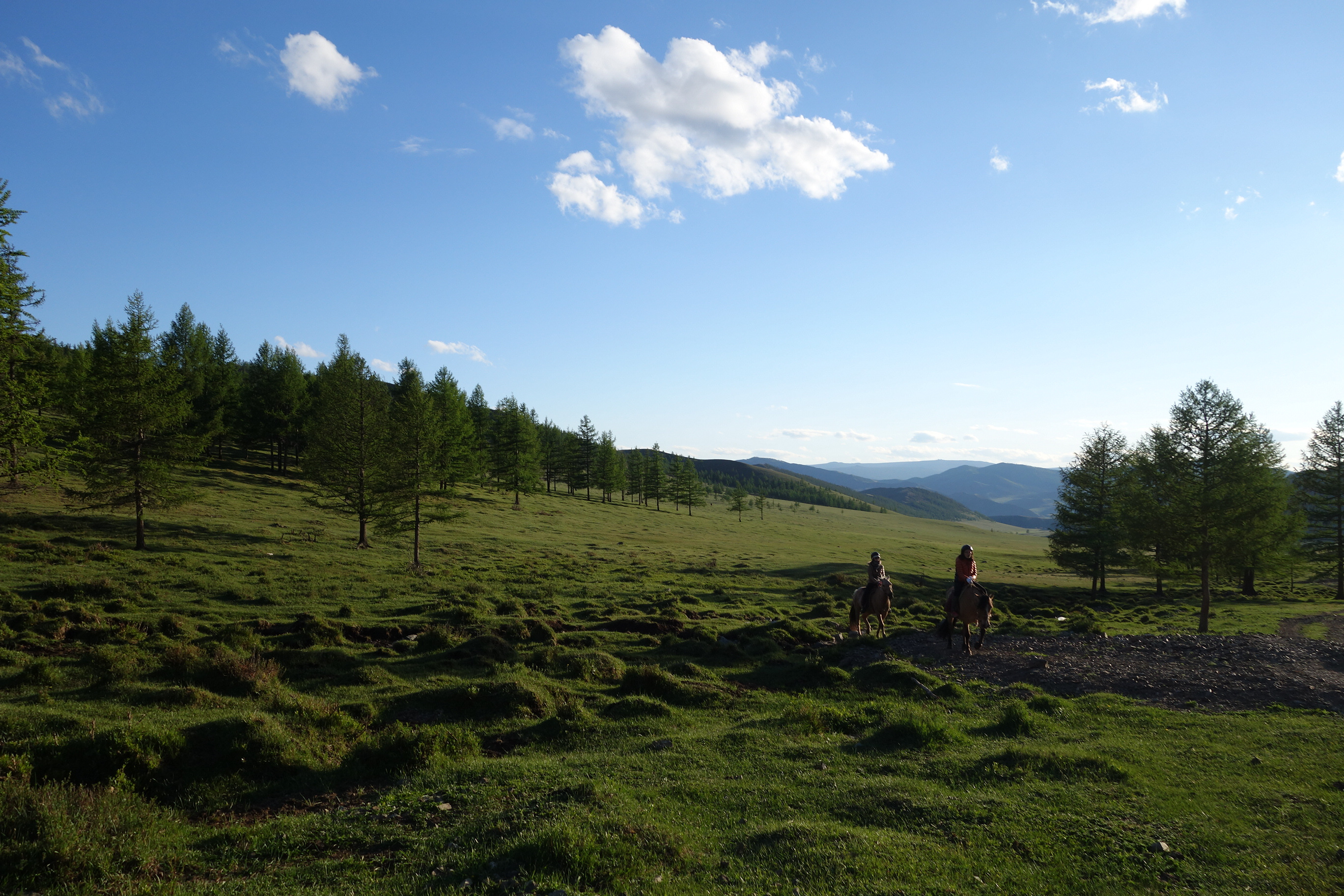
我們在沒水沒電沒網路的蒙古包中住了3天,每天傍晚都會去騎馬約2-3小時,第一天由主人Puujee教我們騎馬,其實是真正上馬背之後,才開始慢慢學習如何駕馭馬匹,而且這次的騎馬是「真的自己騎」,沒有當地人在前方牽馬,連續兩天我們都騎馬到很遠的地方,遠到已經看不到我們住的白色蒙古包。
We spent three unforgettable days living in a remote Mongolian ger, without running water, electricity, or internet. Each evening, we would set out on horseback for two to three hours, venturing deep into the wilderness. On the first day, our host, Puujee, introduced us to horseback riding — yet it wasn’t until we mounted the horses ourselves that the true learning began. This was authentic riding: no guides leading the reins, no one walking beside us. For two consecutive days, we rode far beyond the familiar sight of our white ger, disappearing into the endless horizons of the Mongolian steppe.

第一天去山谷,第二天去山巒,看到的景色都不太一樣,有前面兩天的騎馬經驗,第三天我想應該不會有問題,Puujee也放心把馬匹牽出來交給我們,協助我們上馬之後,先生的馬走在最前面,我及另外兩位韓國女生的馬跟在後面,出發不到十分鐘,先生騎的那匹馬開始發狂一直亂衝,本來在我們前面,又奔跑回我們後面,最後開始彈跳著轉圈,速度很快,我往左邊回頭,親眼看著先生從馬背上摔下來,當下我本能地叫了「啊~」這一叫,我的馬似乎也受到驚嚇,牠開始瘋狂彈跳奔跑,跑了幾步之後,我的眼前一片空白,待我回過神時,我已經躺在佈滿碎石子的路上,所有人奔到我身邊,我完全動彈不得,疼痛蔓延全身,我再也忍不住,哭了起來。
Puujee要我不要動,耐心詢問我哪裡痛?
我哭著說:「我的頭很痛很暈而且看不清楚(連眼鏡都撞歪了),我的背也很痛。」
席間,韓國女生溫柔地遞了一張衛生紙給我。
Puujee開始引導我,想知道我傷得重不重。Puujee說:「現在妳試著抬腳,可以嗎?」
我緩緩抬起左腳、右腳。
Puujee專業的說:「嗯,腳還能動,表示沒事。現在妳能自己翻身嗎?」
我忍著疼痛,左翻身右翻身。但是我還是在哭。
Puujee小心翼翼試探摸我的背,因為我一直說我的背極痛,上背下背痛,其實我自己根本不知道怎麼摔下來又是哪裡先著地,Puujee碰到下背靠近屁股上方那邊,我直說:「這裡!這裡非常痛!」
Puujee稍稍安撫我的情緒說:「目前看起來,骨頭應該沒有斷掉,這是不幸中的大幸,妳可以繼續躺著,等妳想要起來了,我們再合力扶妳起來好嗎?」
補充一下,先生先墜馬,但是他摔下來的地方是沼澤地,有草皮覆蓋及柔軟的土壤,他說像是掉在地毯上。
On the first day, we rode into a valley; on the second, across undulating hills. Each day’s landscape offered something entirely new. With two days of experience behind us, I felt more confident on the third day. Puujee, our host, seemed equally assured — he calmly brought out the horses, helped us mount, and then let us ride independently.
My husband led the way, followed closely by me and two Korean girls. Yet, less than ten minutes after setting off, his horse suddenly went wild, racing ahead, then spinning back toward us, kicking up dust in frenzied circles. In a split second, I turned my head to the left — just in time to see him thrown violently from the saddle.
Instinctively, I gasped, a sharp cry escaping my lips. Startled by the sound, my own horse bolted into a frenzy, leaping and bounding uncontrollably. After a few desperate strides, everything turned white — and the next thing I knew, I was lying motionless on a gravel road.
Within moments, everyone rushed to my side. I couldn’t move; pain surged through my entire body. Overwhelmed, I broke down in tears.
Puujee knelt beside me, urging me gently, “Don’t move. Tell me exactly where it hurts.”
Through sobs, I managed to say, “My head… it hurts, I’m dizzy… I can’t see clearly…” (even my glasses had been knocked askew). “And my back… it hurts so much.”
One of the Korean girls, her hands trembling slightly, handed me a tissue with such tenderness.
Puujee calmly assessed my injuries.
“Try to lift your legs, can you?” he asked.
Slowly, with immense effort, I lifted my left foot, then my right.
“Good,” he said reassuringly. “If you can move your legs, that’s a very good sign. Now, can you try rolling onto your side?”
Fighting back the pain, I managed to roll left, then right — but I couldn’t stop crying.
With great care, Puujee gently touched different areas of my back, trying to locate the worst of the injury. When he pressed near my lower back, just above the hips, I cried out immediately, “There! That hurts so much!”
He nodded thoughtfully and said, “It seems there’s no fracture — that’s a small blessing. Stay lying down as long as you need. When you feel ready, we will help you sit up, slowly and together.”
For context, my husband had fallen first — but he had landed in a marsh, where the soft grass and earth cushioned his fall. He later described it as feeling like landing on a thick carpet.

墜馬後的傷勢
The Aftermath of the Fall
Puujee及先生合力將我拉起,一起慢慢走回蒙古包中。此時傷勢要緊,也顧不得是屁股部位,拉下褲子讓Puujee檢查傷勢,先生看到時驚呼:「喔,我的天啊!」
腰以下,屁股以上的部位大面積挫傷,還帶血。Puujee替我擦面速力打姆(自己帶去的)還去取一顆止痛藥給我,先生說:「妳的左邊屁股整個都是瘀青!」
吃完止痛藥,喝杯熱開水舒緩一下情緒,我此刻還是驚魂未丟,雙手還在發抖。Puujee說馬是有生命有靈魂的動物,也含有野性,牠們每天的狀態都不一樣。談到之前有遊客來騎馬,摔斷脊椎、手指的都有,也說到或許我的馬跟先生的馬是好朋友,牠也想像牠一樣亂跑狂奔…,聽說我的那匹馬,之前跑遠了,還把牠身上的馬鞍抖落並踩壞馬鞍…
摔完馬之後,躺在床上稍作休息,之後去上廁所,發現左手完全無法施力!整個嚇壞我了!晚上也沒洗澡,忍著痛去睡覺,發現左睡右睡正躺都不對,怎麼樣都痛,我幾乎是半醒半痛之間度過摔馬的第一夜。
隔天醒來,疼痛感更劇烈,頭痛、頭暈,左手一樣使不上力、瘀青的範圍更多廣、右邊的脖子一摸就痛,名副其實的「坐也痛、躺也痛」的狀態。
為了不想讓Puujee擔心,我總說:「喔,我的狀態比昨天好!」
我還是很痛,只是我不說。
發生墜馬事件,我不怪任何人,總是會有突發狀況,只是,發生時,我們要知道怎麼面對它。現在,我正在學習面對。
With Puujee and my husband on either side, I was slowly helped to my feet and we began the careful walk back to the ger. At that point, modesty gave way to necessity. The pain was too urgent. I lowered my trousers so Puujee could assess the injury. My husband, catching a glimpse, gasped, “Oh my God.”
The area between my lower back and upper thigh was badly bruised — swollen, darkened, and even bleeding in places. Puujee gently applied some Mentholatum ointment I had brought with me and gave me a painkiller he retrieved from his own supplies. “You’ve got a massive bruise on your left side,” my husband said, his voice tight with concern.
I drank a cup of hot water and tried to calm my nerves. My hands were still trembling.
Puujee sat beside me and spoke gently. “Horses have spirits,” he said. “They are living beings, and sometimes they carry a wildness inside them. Each day, they are different.”
He told stories of previous riders — tourists who had broken fingers or even their spines after a fall. He mused that perhaps my horse and my husband’s horse were close companions — maybe mine simply followed the other’s madness.
Apparently, my horse had once run off so far it threw off its saddle and trampled it beyond repair.
It was a wild horse — no doubt about it. After hearing his words, I could only whisper inwardly: thank you, horse… for letting me fall, but not breaking my spine or ribs.
(Though in truth, I couldn’t even force a smile.)
Back in the ger, I lay down to rest, but when I tried to go to the toilet later, I was horrified to discover I couldn’t apply any strength with my left hand. I went to bed that night without showering, curled into myself through the pain. No position felt right — not lying on my back, not on either side. That first night after the fall, I drifted in and out of sleep, caught in a haze of ache and exhaustion.
The next morning, the pain was worse. My head throbbed, dizziness lingered, and my left arm remained useless. The bruises had deepened and spread, and now the right side of my neck was sore to the touch. I had truly entered a state where both sitting and lying down were equally excruciating.
Still, I didn’t want to worry Puujee.
“I feel a little better than yesterday,” I told him, over and over.
It wasn’t true. I was in pain. I just chose not to say it.
I don’t blame anyone for what happened. Accidents come without warning — that’s their nature. What matters is how we respond when they do. And now, I am learning how to respond. I am learning how to face it.

在蒙古學騎馬
Learning to Ride in the Heart of Mongolia
我平時並不是outdoor咖,但是來到蒙古,不知怎的,看到遼闊草原,總有想要策馬奔騰的念頭,加上我們住宿的傳統蒙古包費用,包含住宿、每日餐食、每日騎行,就在毫無經驗下,在蒙古開啟了騎馬之旅。
蒙古包主人Puujee說他在7歲時第一次上馬背,他的哥哥教他學騎馬,學習期間曾經被馬摔飛出去過,說他當時很小一直哭…,但是他的哥哥要他立刻回到馬背上繼續騎馬,在哥哥的嚴格教導之下,Puujee的騎馬技術非常傑出。
回顧我的騎馬經驗,少得可憐,唯一的印象是跟Vera在斯里蘭卡時,臨時起意要騎馬,與其說騎馬,不如說是坐在馬上面而已,由馬伕牽著兜逛了一圈,結束第一次的騎馬經驗。帶著這樣的想像到了蒙古,待Puujee協助我們穿上綁腿之後,發現完全不是這麼回事…。
我們穿戴完畢,Puujee從馬廄中拉出幾匹馬,簡單教導我們一些指令,像是發出「ㄩ ~」是停止的意思、「咻~」是走的意思,還有身體放鬆,韁繩不要拉太緊等等,我們就一一上馬,Puujee在我們前方或身後,隨時查看。
我不太清楚蒙古的馬匹狀態,我知道我住的蒙古包這些馬匹,平時是放養在森林平原大自然環境中,到了晚上才會叫回來馬廄過夜,我猜想未完全馴化,加上Puujee平時對馬兒愛護有加,不是以馬鞭辱打馬匹的人,這裡的馬,充滿野性。也因為未馴化、充滿野性,更增加許多不確定因素。
我將我墜馬的事情一五一十分享給移居在烏蘭巴托的台灣太太,她聽到之後捏把冷汗說:「我在蒙古騎馬,都還是在騎馬場,有騎馬老師帶領,跟在身邊,沒有像你們這樣自己騎馬出去耶~」
聽完之後,我真的不知道要哭還是要笑,心裡五味雜陳。
I’ve never considered myself the outdoorsy type. Yet something about Mongolia’s vast, unbroken grasslands stirred a longing deep within me — a sudden, inexplicable desire to ride. Our stay in a traditional Mongolian ger included not just accommodations and daily home-cooked meals, but also horseback riding sessions. With zero prior experience, I found myself embarking on a true equestrian adventure in the heart of the steppe.
Our host, Puujee, shared that he first got on a horse when he was just seven years old. His older brother taught him, though the lessons weren’t gentle. He recalled being thrown from the saddle as a child, crying from both fear and pain. But his brother insisted he climb back on immediately. Through that tough love, Puujee became a remarkably skilled rider — patient, intuitive, and quietly proud.
Looking back, my only “riding” experience had been in Sri Lanka with my friend Vera, where we spontaneously decided to mount a horse. In truth, we merely sat atop while a handler led the animal in a slow loop — more like a scenic prop ride than actual horseback riding. So I arrived in Mongolia with that image in mind. But once Puujee helped us strap on traditional leather gaiters, I quickly realized: this was going to be very different.
After we suited up, Puujee brought out several horses from the stable. He gave us a crash course in basic commands — a soft “Yu~” to stop, a gentle “Shuu~” to go, and reminded us to keep our bodies relaxed and not pull the reins too tightly. One by one, we mounted. He rode ahead or behind us, always keeping a watchful eye.
I’m no expert on Mongolian horses, but I learned that the ones at our camp roam freely through the forests and plains during the day, only returning to the stables at night. They’re not entirely domesticated. And because Puujee treats them with great respect — never using the whip or force — these horses retain much of their wild spirit.
That wildness, though beautiful, also adds a layer of unpredictability.
Later, I shared my dramatic fall-from-the-horse experience with a Taiwanese woman living in Ulaanbaatar. She gasped and said, “When I go horseback riding in Mongolia, it’s always in a controlled arena with instructors riding beside you — never out in the open like that!”
I didn’t know whether to laugh or cry. I was overwhelmed — grateful for the experience, shaken by its intensity, and still processing everything in between.

寫在後面,回到台灣之後…
Epilogue: After Returning Home to Taiwan
帶著身上的傷,一路奔波來到仁川機場轉機,還必須在仁川機場的過境旅館住一晚,再回台灣。返抵國門,回到家之後,放完行李又急匆匆奔去林口長庚掛急診,描述了墜馬經過及現下身上的傷及狀況。
急診室外科醫生說墜馬後的12小時是腦溢血高峰期,但是我們還能自行搭捷運就醫,表示應該沒有大問題。有問是否需要照X光、斷層掃描,醫生說要照那些有一定的流程、病症,我的病症還不需要。
我不安地問:「可是我的左手沒有力誒~」
醫生:「現在妳一定是全身都痛,摔下來時有拉到肌肉或神經,這需要時間讓身體自己慢慢復原。」
醫師開了些止痛、止暈藥及挫傷的藥膏給我,並給一張「撞到頭部的安全須知」,這幾天密切觀察,若有嗜睡叫不醒、吐2次以上才需要再度去醫院就醫。
護理師幫我處理(以食鹽水清理時超級無敵痛)挫傷時問:「妳是出車禍嗎?」
我忍著痛說:「噢,我去蒙古騎馬,從馬背上摔下來。」
護理師一臉不可思議的表情,彷彿我來自外星球。
回到家稍微冰敷,躺在沙發上無腦看完一集日劇 ,之後去睡覺。那晚我學會了「騰空翻身」,這樣就不會碰到傷口了。(苦笑)
With visible bruises and a lingering ache beneath the skin, I made my way through Incheon Airport — the final layover before returning home to Taiwan. I spent a night at the airport transit hotel, my body sore, my mind still replaying the fall, before finally boarding the flight back.
No sooner had I dropped my suitcase at home than I rushed to the emergency department at Chang Gung Memorial Hospital in Linkou. There, I described the horse-riding accident in detail — the symptoms, the pain, and my growing concern.
The ER doctor calmly explained that the first 12 hours post-trauma were the critical window for a potential cerebral hemorrhage. The fact that I could still take the metro to the hospital was, reassuringly, a good sign. I asked if I needed an X-ray or a CT scan. The doctor explained that such procedures require clear indicators or more severe symptoms — at that point, my case didn’t qualify.
“But I have no strength in my left hand,” I said anxiously.
He replied, “Right now, your whole body is likely inflamed — the fall may have pulled muscles or irritated nerves. It will take time for your body to heal naturally.”
I was prescribed painkillers, anti-dizziness medication, and ointment for bruising. A nurse handed me a “head trauma safety sheet,” advising me to monitor symptoms like excessive drowsiness or vomiting — if either occurred, I’d need to return immediately.
As the nurse cleaned my bruises with saline solution — a sting that felt like fire — she asked gently, “Were you in a car accident?”
Biting my lip against the pain, I managed a strained smile: “No… I was horseback riding in Mongolia. I fell off.”
She looked at me, wide-eyed, as if I’d just arrived from another planet.
Back at home, I applied cold compresses and collapsed onto the couch, mindlessly watching an episode of a Japanese drama. Later that night, I discovered a new skill — the airborne side-roll — a technique born of necessity, so I wouldn’t put pressure on the worst bruises as I tried to sleep. (Bitter laughter, optional.)
墜馬後的不到一個月,我跟Vera前往東京、河口湖旅行,其實身體已經恢復大半,行動也自如了,只是瘀青還未完全消退,下背的挫傷也還有,都在慢慢恢復中。當天出門時,我照例背上雙肩後背包,都還沒有走出家門,就痛到受不了,因為後背包的下緣剛好壓在我的挫傷傷口上頭,痛到我根本無法走路,臨時抓了一個帆布包,把所有東西都移過去,這才順利出門。
在蒙古墜馬後,才明白體會到【快樂出門、平安回家】的真諦 🙂
Less than a month after the fall in Mongolia, I set off on another journey — this time with Vera, to Tokyo and the serene shores of Lake Kawaguchi. My body had mostly healed by then; I could move freely and without much discomfort. The bruises had begun to fade, though not entirely, and the contusions on my lower back still lingered — healing, but slowly.
That morning, as I prepared to leave the house, I instinctively slung on my usual backpack. I hadn’t even stepped out the door when a sharp pain stopped me in my tracks — the bottom edge of the pack pressed directly against the still-tender injury on my lower back. The pain was so acute I couldn’t take another step. In a rush, I swapped everything into a simple canvas tote, and only then could we begin the journey.
It was in the quiet aftermath of that Mongolian accident that I came to fully understand the truth behind an old saying — “Leave with joy, return in peace.”
Read more:蒙古國 旅行記事
 Hertz租車 9折優惠
 蒙古包住宿推薦:Dream Adventure Mongolia
add_ Gatsuurt, Gorkhi-Terelj National Park Mongolia
tel_ +976-99661107 / +976-88176271
info_ 預定Dream Adventure Mongolia蒙古包住宿,在Message*欄位、官方Facebook私訊輸入折扣代碼☞ivyleetravel☜享有房費8折優惠
把自己的人生活得精彩並熱愛這一切,是最重要的使命。
